



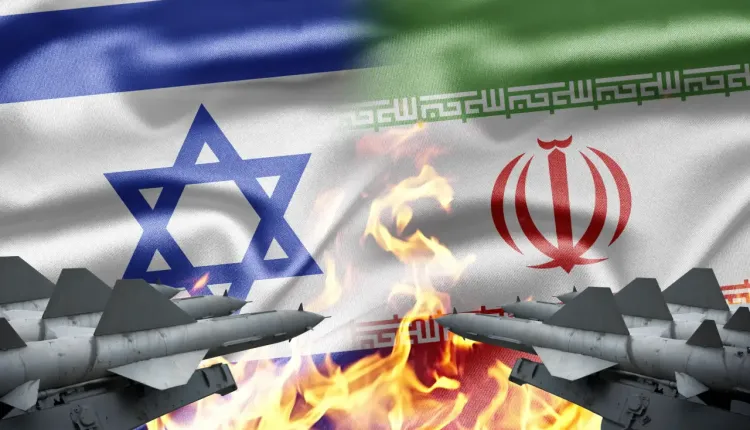
The early morning of 13 June 2025 marked a dramatic escalation in the Middle East’s enduring power struggle.
In an unprecedented offensive, Israel launched strikes across Iran, targeting nuclear facilities in Natanz and Fordow, and killing high-profile figures within the Islamic Revolutionary Guard Corps (IRGC), including Major Generals Hossein Salami and Mohammad Bagheri.
Civilian casualties were also reported, casting a long shadow over the legality and proportionality of the attack.
Iran’s response was swift and deliberate. By nightfall, Tehran had launched over 100 drones and more than 100 ballistic missiles under the codename Operation True Promise III, striking targets in Tel Aviv and elsewhere across Israel.
Though Israel’s Iron Dome intercepted most projectiles, the symbolic and strategic message was unequivocal: Iran will not absorb strikes of such magnitude without reprisal.
Is Iran Going for Broke? The Strategic Calculus
The titular question—whether Iran is “going for broke”—demands an evaluation not merely of its military actions but of the broader strategic posture it is adopting.
The current confrontation is not just a reactive exchange but a deliberate recalibration of deterrence doctrine in the region.
Israel, long committed to preventing Iran from achieving nuclear breakout capability, has signalled a shift from covert sabotage to overt military action. For its part, Iran has demonstrated that its retaliatory arsenal is both credible and increasingly precise.
But does this reflect a ‘go for broke’ posture—an all-in gamble irrespective of consequence—or a strategic, controlled escalation designed to reset red lines without inviting total war? A careful reading suggests the latter.
Political and Military Theatre: Calculated Escalation
Iran’s leadership is navigating between the need to project strength and the risk of overreach. The deaths of high-ranking IRGC figures pose a direct challenge to regime legitimacy.
The leadership’s ability to respond forcefully is vital for regime cohesion and for maintaining revolutionary credentials. This domestic imperative necessitates bold action but not recklessness.
Similarly, Israel under Prime Minister Netanyahu appears to favour pre-emptive strikes to maintain its military supremacy and deter adversaries. However, Israel’s operations remain short of outright war declarations, suggesting an awareness of the strategic limits of force.
Legal and Ethical Frameworks in Crisis
The conflict raises pressing legal and ethical concerns. Under international law, the use of force must adhere to principles of necessity, proportionality, and distinction.
Israel claims pre-emptive self-defence against an imminent Iranian nuclear threat—a claim not independently verified by international bodies such as the IAEA. Iran, conversely, frames its missile retaliation as a lawful response to unprovoked aggression.
Yet both sides have inflicted civilian harm, indicating a troubling erosion of humanitarian norms. If this continues, the legality of each actor’s conduct will come under increased scrutiny in global forums.
Assessing the ‘Go for Broke’ Threshold
To determine if Iran is “going for broke,” one must assess its military, political, and regional calculations:
Indicators of Escalation:
National Honour and Credibility: The regime has absorbed high-value losses and must assert dominance to avoid perceptions of vulnerability.
Deterrence Through Demonstration: A strong response serves to signal resolve, particularly to regional rivals and Western observers.
Proxy Activation: Iran has the capability to expand the conflict via Hezbollah, Iraqi militias, or the Houthis—extending the theatre without direct attribution.
Constraints Against Total Escalation:
Military Asymmetry: Iran cannot match Israel’s air superiority, satellite surveillance, and cyber capabilities.
Risk of US Intervention: Escalating the conflict to regional war could provoke a US-led coalition, shifting the military balance dramatically.
Economic Fragility: Years of sanctions, inflation, and civil unrest make prolonged conflict untenable for the Islamic Republic.
Thus, Iran appears to be executing a deliberate balancing act: bold enough to re-establish deterrence and preserve national pride, but cautious enough to avoid inviting existential consequences.
Conclusion: Calculated Brinkmanship, Not Strategic Folly
Iran is not “going for broke” in the literal sense of committing to a full-scale war. What we are witnessing is an exercise in calibrated brinkmanship—a high-stakes performance intended to deter future aggression, solidify domestic unity, and signal resolve without triggering uncontrollable escalation.
Israel’s strikes, while devastating, also reflect limits. They aim to reset regional power equations rather than obliterate Iran’s command structure. Both states, while adversarial, appear aware of the consequences of breaching the threshold into full-scale warfare.
The real danger lies in miscalculation. As each side tests the other’s resolve, the margin for error narrows. The international community must act swiftly to reassert the primacy of diplomacy, the rule of law, and mechanisms for de-escalation.
In sum, Tehran’s strategy is assertive, deliberate, and conditionally constrained. It is not yet an all-in gamble—but it is a stark warning that the limits of regional containment are wearing thin.
Dr Sibangilizwe Moyo writes on Church & Governance, politics, legal and social issues. He can be reached at [email protected].