



In the shadow of the 7 October 2023 attacks by Hamas on Israeli territory—one of the deadliest acts of terrorism in recent Middle Eastern history—a new geopolitical fault line is being drawn in the realm of diplomacy.
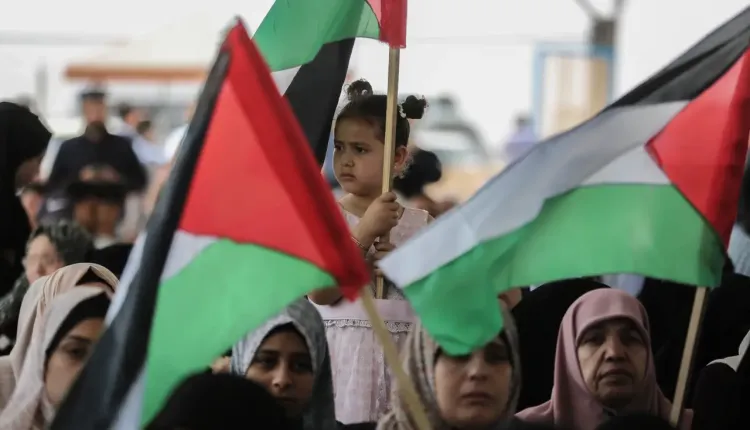
Several Western states, most recently Norway, Ireland, and Spain, have moved to formally recognise the State of Palestine. This shift, while largely symbolic, has ignited profound questions about the morality and timing of diplomatic recognition.
Critics charge that such recognition, occurring in the aftermath of unspeakable violence, amounts to paying a political ransom—rewarding terror with statehood. This argument, at once emotionally charged and analytically consequential, deserves careful scrutiny.
At the core of this debate lies a moral and political conundrum: Does recognising Palestine at this juncture reinforce the legitimacy of Hamas, or does it instead rescue the idea of a Palestinian state from the grip of extremism?
This essay contends that the dichotomy between recognition and ransom is false, and that a deeper historical, ethical, and political analysis reveals recognition not as capitulation, but as strategic reclamation of a long-derailed peace process.
I. The Semiotics of Recognition
In international law and diplomacy, recognition is never neutral. It is an intentional act loaded with political semiotics. It validates claims to sovereignty, affirms a people’s collective identity, and signals a willingness to engage with political entities on equal footing.
Recognition, however, is also selective and strategic—historically granted not solely on moral grounds but often based on geopolitical expediency and the evolving consensus of state actors.
When states move to recognise Palestine in the wake of 7 October, they are not engaging in abstraction. They are intervening in a discursive battlefield where narratives of victimhood, terrorism, occupation, and resistance are constantly in flux.
Critics argue that such timing renders recognition morally bankrupt—a gesture made under duress, akin to rewarding hostage-takers with legitimacy. The analogy, though rhetorically powerful, fails to stand up to historical and analytical rigor.
II. Disaggregating Hamas from Palestine
The first conceptual error in the “recognition-as-ransom” thesis lies in conflating Hamas with the Palestinian national project. Hamas is neither the sole nor the founding representative of Palestinian aspirations.
Its ideology, rooted in political Islam and militant resistance, diverges significantly from the secular nationalist legacy of the Palestine Liberation Organisation (PLO) and the diplomatic ambitions of the Palestinian Authority (PA).
To hold the Palestinian people hostage to the actions of Hamas is to commit a category error: collapsing a broad and diverse national movement into the parochial ideology of a single faction.
This form of reductionism undermines the principle of collective self-determination and grants Hamas precisely the centrality it seeks—making it the arbiter of Palestinian legitimacy in the eyes of the world.
Moreover, such logic sets a dangerous precedent. If state recognition is to be perpetually postponed until every non-state actor in a given polity renounces violence and adopts liberal democratic norms, few post-colonial states would ever have emerged in the 20th century.
History is replete with movements that oscillated between militancy and diplomacy.
The Israeli state itself was birthed amid acts of violence committed by groups like the Irgun and the Stern Gang—actions that were not disqualifying in the eyes of the international community, given the broader legitimacy of the Zionist claim to nationhood.
III. The Ethical Failure of Strategic Withholding
The argument that recognition should be contingent upon good behaviour has intuitive appeal, but it often fails in practice. The decades-long refusal to recognise Palestine has not weakened extremist factions—it has empowered them.
In the absence of a credible political horizon, actors like Hamas have been able to position themselves as defenders of a besieged people, drawing strength from despair and statelessness.
If the international community’s refusal to recognise Palestine was meant to incentivise moderation and negotiation, it has demonstrably failed.
What has emerged instead is a bifurcated Palestinian political body, a fragmented geography, and a populace radicalised not merely by ideology but by lived experiences of occupation, blockade, and disenfranchisement.
To continue withholding recognition on the grounds of terror is to double down on a strategy that has produced only impasse and death. It is a form of strategic paralysis disguised as moral clarity.
Recognition, by contrast, offers a way to re-centre the political process—to re-legitimise the Palestinian Authority, re-energise the diplomatic track, and marginalise extremist actors by rendering their tactics politically redundant.
IV. Reclaiming the Peace Process from Extremism
Recognition is not the endgame—it is a recalibration. By recognising Palestine, states are not endorsing Hamas but rather articulating a vision of Palestinian identity that exists outside of Hamas’s ideological and military frame.
It is a message to Palestinians that their statehood is not conditional upon the behaviour of those who claim to represent them through violence.
It is also a message to Israel that continued occupation and settlement expansion are incompatible with the norms of the international community.
Moreover, recognition may serve a pragmatic function: by establishing diplomatic parity between the two sides, it restores the possibility of negotiations grounded in mutual statehood.
The asymmetry between a recognised state (Israel) and a stateless people (Palestinians) has long skewed the peace process toward structural imbalance.
Recognition may not eliminate this asymmetry overnight, but it symbolically rectifies a core injustice and creates new diplomatic tools for de-escalation.
V. The Moral Geometry of Political Timing
One must, however, acknowledge the discomfort inherent in the timing of recognition. To act in the immediate aftermath of mass terror raises legitimate ethical questions. But history rarely provides clean breakpoints for moral action.
If the world waits for perfect conditions to validate the legitimacy of oppressed peoples, it will wait indefinitely. Indeed, the same states now moving toward recognition have repeatedly delayed such action precisely because of previous cycles of violence.
If recognition is forever postponed due to the conduct of non-state actors, then those actors effectively gain veto power over the diplomatic future of entire nations.
Recognition, then, is not ransom—it is reclamation. It wrests the Palestinian cause from the grip of militants and repositions it within the framework of international law, diplomacy, and political legitimacy. It is a reaffirmation that people’s have the right to statehood not because they are flawless, but because they are human.
Conclusion: Beyond Symbolism
The criticism that recognition rewards terror is seductive but incomplete. It offers emotional satisfaction but not analytical clarity. A deeper reading reveals that the greater danger lies not in premature recognition, but in endless deferral.
Recognition of Palestine in this moment is neither appeasement nor naivety—it is a necessary act of moral and strategic rebalancing.
The future of peace in the region cannot be held hostage to the actions of Hamas, nor can the Palestinians be indefinitely denied a homeland because of the sins of a faction. Recognition is not a capitulation to terror—it is the reassertion of diplomacy over despair.
Dr Sibangilizwe Moyo writes on Church and Governance, politics, legal and social issues. He can be reached at [email protected]