



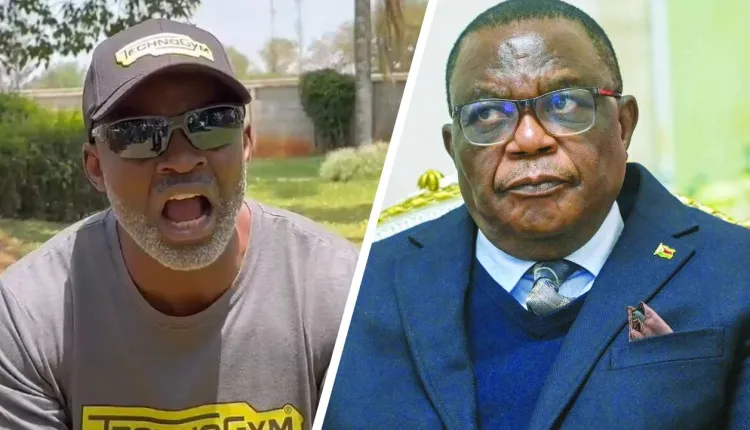
Recently, Temba Mliswa—once independent, now very much a voice within the ZANU-PF fold— unleashed what he calls “explosive allegations” against Vice President Constantino Chiwenga.
Let us examine what Mliswa says, how he says it, and why the pattern here feels more like spectacle than justice.
What Has Mliswa Alleged?
- Lavish Gifts and Cash from Wicknell Chivayo
Mliswa claims that Chiwenga demanded luxury items (six Rolls-Royces for his wedding, large sums in US$ for wedding preparations), honeymoon expenses, generous shopping budgets, even apartments for his children—all from Wicknell Chivayo.
When Chivayo allegedly failed to meet all these demands, their relationship soured, and thereafter what was presented as an anti-corruption campaign became a vendetta.
- Hijacking of the Anti-Corruption Narrative
According to Mliswa, Chiwenga’s corruption crusades are being used as a political weapon. To settle scores. To outmaneuver rivals, not to deliver justice.
- Selective Exposure and Institutional Weakness
He asserts that many in the party, and in government, benefit from corruption. So exposing one or another without impartial, consistent institutional action is hollow. More masquerade than reform.
Has Mliswa Debunked the Dossier?
No. What is striking in his approach is that Mliswa does not—or at least has not yet—disputed the factual core of Chiwenga’s dossier (if what is in public domain is true), nor does he offer his own independent audit of the claims.
Rather, he seeks to repurpose the discourse: to frame the dossier as less about national reform, more about personal betrayal, factional politics, and power.
In other words, the veracity of the claims might stand or fall elsewhere—but Mliswa’s intent is to muddy the pool: to make people question why these revelations are coming, who benefits, and whether justice will ever be equal.
He offers not counter-facts so much as counter-narrative: that the crime is not always exposure, but exposure deployed as weapon.
What Are the Intentions Here?
If I were to hazard a reading of what Mliswa is doing (beyond what he says he is doing), it might go like this:
Factional Posturing: ZANU-PF is no stranger to internal power plays; the polishing of one’s credentials via exposing another has become one of its tools.
By pointing to Chiwenga’s supposed hypocrisy, Mliswa may be enacting a move to elevate or signal loyalty elsewhere (perhaps toward Mnangagwa’s camp) while undermining a rival.
Shifting Blame, Simulating Real Reform: The language of corruption vs anti-corruption is potent. Mliswa seems to want the public to believe there is genuine corruption, but that current “anti-corruption” campaigns are selective, politically motivated, and cynically timed.
This shifts the blame from the system to individuals, while preserving the system.
Preemptive Defense: If Chiwenga or his allies attempt legal or institutional retaliation, Mliswa is laying groundwork—“these claims can be proved in court”—to protect himself.
By casting doubt on the motives of Chiwenga, Mliswa complicates any simple narrative of “wrongdoer being punished.”
Public Distraction / Legitimacy Management:
In a country where many feel the economy, governance, services, and accountability are failing, loud allegations like these become spectacle. They redirect attention—sometimes from more systemic crises, sometimes from failures at other levels.
They also give the perception that something is being done, even if the outcomes are weak or inconclusive.
The Guts to Normalise the Rot — Without Remorse, Without Fear?
What strikes me most is that Mliswa operates with a confidence (and impunity) that has become emblematic of Zimbabwe’s political class. He airs allegations, names names, claims juicy details—wedding cars, Rolls-Royces, millions of USD—without (so far), being arrested for defamation, or prosecuted
This suggests several trajectories:
Either he has substantial backing that protects him from legal reprisals, or
The legal system is so compromised or selective that speech of this sort, when directed at certain figures, is tolerated or even encouraged by power centers, so long as it serves factional interests, or
The culture of impunity has spread, such that public figures believe they can gamble with truth and reputations—and that even if exposed later, their political risk is manageable.
Either way, yes: there is a normalisation of rot. The notion that corrupt practices are only wrong when wielded by one faction, that “those in our camp” are beyond reproach, is being cemented.
The fact that Mliswa does not show remorse—even for implicating a General, a national hero long lionised in military circles—speaks to how erosion of fear has set in. The police are investigating (or are supposed to) but not, so far as we see, in a manner that suggests convictions, truth recovery, or an end to selective justice.
Where Has the Country Gone?
Putting all of this together, Zimbabwe has drifted—or been drifted—into a centre where:
Allegations matter more than accountability. It is the noise that counts: exposure, names, moments of scandal. Whether things change is often beside the point.
Corruption is weaponised. Instead of being a shared enemy, corruption becomes a tool in intra-party wars, power consolidation, and succession battles.
Institutions are weak or compromised. Courts, police, anti-corruption bodies (like ZACC) often lack independence or consistency. The risk for powerful people is low; for ordinary citizens, even speaking out can mean danger or oblivion.
The public becomes desensitised. When millions for weddings, flagship contracts, and accusations fly daily—with little visible consequence—the bystander becomes passive, blaming is diffused, and cynicism grows.
Leadership loses moral authority. When Vice Presidents are accused of lavish excesses, when senior generals are named in dossiers, when the President seems to tolerate or orchestrate factional exposure, people’s faith in leadership to serve the public good erodes.
Final Thoughts: Has Zimbabwe Been Sold Snake Oil?
Yes, in a very real sense—but perhaps not the snake oil some think. The potion sold is not false entirely: there is corruption, there are wrongs, there are abuses. But the cure proposed is often at best superficial, and at worst a placebo or a poison.
“Anti-corruption” has become a brand: useful in public discourse, useful for foreign donations, useful for managing perceptions. But when stripped of independent investigation, genuine prosecutions, systemic reform, even humble commitment to equal justice, it risks being nothing more than an opiate for political discontent.
Zimbabwe’s problem is not a shortage of exposés. It is a shortage of consequences. It is not a lack of talk around corruption but a lack of institutions strong enough to carry shame, impose penalty, and restore trust.
What Must Be Done?
If I may prescribe (with some hope), here are what I believe must happen to begin to reverse this trend:
- Institutional Independence: The anti-corruption commission, the judiciary, the police must be free from factional capture. Their leadership must be seen (and be) honest; their budget transparent; their mandates respected.
- Transparency and Evidence: When allegations are made, there must be prompt, public disclosure of evidence, fair opportunities to respond, and if claims are false, consequences; if true, justice.
- Equal Enforcement: No more selective targeting. Whether one is in power, or in the “right” faction, or a business associate, or family member—if laws exist, they should apply equally.
- Civic Engagement and Oversight: Media, civil society, traditional leaders have roles to play. But especially ordinary citizens must reclaim demand for accountability—vote, protest, speak—even at risk.
- Normalising Remorse and Integrity: Leaders must stop treating corruption as an inevitability, as something to be joked about or denied until exposed. Admitting wrongdoing, resigning, restitution—these must return as standard expectations, not exceptions.
Zimbabwe is at a crossroads. We can let this become yet another chapter where the public is entertained by reveal but betrayed by inertia. Or we can begin to insist that reveal must lead to redress, that exposure must not be just spectacle, but an obligation to change.
What will we choose?
Dr Sibangilizwe Moyo writes on Church and Governance, politics, legal and social issues. He can be reached at [email protected]