



This paper explores the geopolitical implications of a hypothetical Indo-Pakistan escalation occurring at a time when traditional Western powers, particularly the United States, are preoccupied with the protracted conflict in Ukraine.
It argues that global unipolarity is waning, and a multipolar conflict management framework is emerging.
This hypothesis is developed through a historical review of third-party interventions in South Asia, a contextual analysis of current global power alignments, and an assessment of regional deterrents and stabilisers.
1. Introduction
The Indo-Pakistani conflict remains one of the most volatile and enduring rivalries of the post-colonial world. Traditionally, external powers, especially the United States, have played a pivotal role in diffusing crises between the two nuclear-armed neighbours.
However, the current global context—marked by the West’s entanglement in Ukraine and broader systemic shifts towards multipolarity—raises pressing questions about who will mediate or restrain an Indo-Pakistan escalation should one occur today.
2. Historical Role of Third Parties
Since 1947, Indo-Pakistani tensions have erupted into full-scale wars (1947–48, 1965, 1971) and high-stakes skirmishes (e.g., Kargil in 1999, Balakot in 2019). During these crises, third-party interventions, though ad hoc, have been crucial in preventing further escalation.
The United States, often dubbed the world’s ‘policeman’, has historically prioritised crisis management over conflict resolution, generally intervening only when broader regional or global stability was at risk.
3. The Separation of British India in 1947
The roots of Indo-Pakistani rivalry are deeply embedded in the Partition of British India in 1947, a monumental and traumatic event in South Asian history. The separation was precipitated by a complex interplay of political, religious, and colonial dynamics.
British India, a vast and culturally diverse colony, had long been governed through a policy of divide and rule.
As independence movements gained momentum in the early 20th century, the Indian National Congress and the All-India Muslim League emerged as dominant political forces, with the latter advocating for a separate Muslim homeland.
The failure to reconcile divergent nationalist visions led to the Mountbatten Plan of June 1947, which facilitated the creation of two dominions: India and Pakistan.
The rationale behind Partition was largely communal—Muslim-majority areas were to constitute Pakistan, while Hindu-majority regions remained in India. However, the abrupt and poorly managed division led to massive displacement, communal violence, and lasting animosities.
The contested accession of the princely state of Jammu and Kashmir further cemented the antagonism, becoming a persistent flashpoint in bilateral relations.
4. The Ukraine Conflict and Strategic Distraction
The ongoing war in Ukraine has commanded disproportionate attention and resources from the U.S. and its European allies. This has limited Western capacity to respond to crises in other geopolitical theatres.
The Indo-Pakistan rivalry, while perennially dangerous, has fallen down the list of global priorities, raising concerns about the deterrent effect of Western diplomatic engagement.
5. Current Escalation: The Tourist Massacre and Border Skirmishes
In early May 2025, a brutal attack resulted in the deaths of 27 tourists in the Jammu and Kashmir region, an incident swiftly attributed by Indian authorities to cross-border militant groups allegedly operating from Pakistan-administered territories.
The attack, which targeted civilians including foreign nationals, has triggered a fresh wave of bilateral hostility.
India responded with artillery shelling across the Line of Control (LoC), prompting retaliatory fire from Pakistani forces. Casualties have been reported on both sides, and troop movements suggest a mobilisation pattern reminiscent of pre-war posturing.
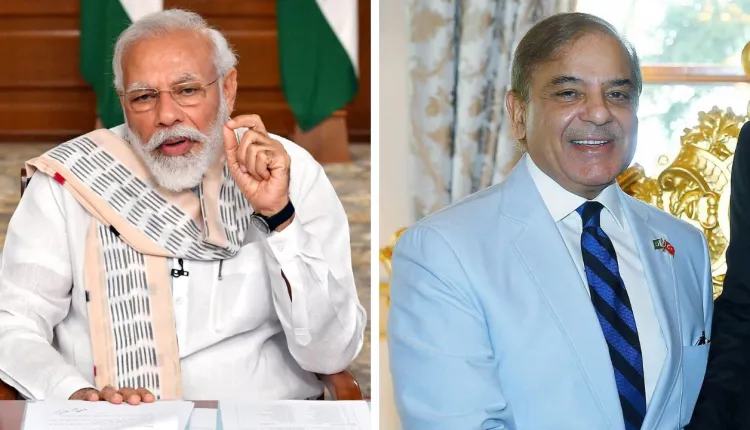
The Indian Prime Minister has publicly vowed to exact a “proportionate and decisive” response, while the Pakistani leadership has warned against “reckless adventurism” and placed its armed forces on high alert.
This emerging situation bears all the hallmarks of a full-scale conflict, escalating beyond the scope of traditional border skirmishes. The absence of immediate third-party intervention has exacerbated tensions, raising the spectre of war between two nuclear-armed states.
6. Hypothesis: Multipolar Regionalisation of Conflict Management
This paper hypothesises that in the absence of a fully engaged global hegemon, South Asia will increasingly rely on a regionally distributed, multipolar mechanism for managing crises. This mechanism will be informed by the following dynamics:
6.1 Nuclear Deterrence
The existence of nuclear weapons imposes a rational ceiling on escalation. Historical precedents, particularly the Kargil War and the 2019 Balakot-Pulwama exchange, demonstrate how nuclear-armed adversaries engage in limited conflicts but avoid full-scale war.
6.2 China’s Strategic Interests
China’s dual role as an ally to Pakistan and a trading partner with India complicates its position. While China may not act as a neutral mediator, its economic interests—especially through the China-Pakistan Economic Corridor (CPEC)—provide it with incentives to preserve regional stability.
6.3 India’s Global Ambitions
India’s increasing integration into global markets and its strategic partnerships with the U.S., EU, and Japan enhance its stake in maintaining a stable regional image. This may lead to internal restraint in times of crisis.
6.4 Gulf States and Economic Diplomacy
States such as the UAE and Saudi Arabia, with deep economic ties and diaspora linkages to both India and Pakistan, have increasingly played a mediating role, albeit informally. Their financial leverage may contribute to de-escalation mechanisms.
6.5 Multilateral Institutions
Organisations such as the Shanghai Cooperation Organisation (SCO) and the UN can provide platforms for dialogue and early-warning systems, though their efficacy is limited by political constraints and lack of enforcement powers.
7. Conclusion
In a global order transitioning from unipolarity to multipolarity, the management of regional conflicts like the Indo-Pakistan rivalry will increasingly fall upon regional actors and multilateral institutions.
While the traditional ‘world policeman’ is otherwise occupied, a combination of nuclear deterrence, economic interdependence, and regional diplomacy may serve as effective—if imperfect—substitutes for direct superpower intervention.
This evolving paradigm necessitates a recalibration of both policy and scholarship concerning South Asian security.
References
- Barakat, S. (2020). The Role of the Gulf States in Conflict Mediation in South Asia. Middle East Policy Council.
- Ganguly, Š. (2001). Conflict Unending: India–Pakistan Tensions Since 1947. Columbia University Press.
- Kaplan, R. D. (2022). The Return of Geography and the Future of Western Strategy. Foreign Affairs.
- Small, A. (2015). The China-Pakistan Axis: Asia’s New Geopolitics. Oxford University Press.
- Tellis, A. J. (2002). The Stability of Nuclear Deterrence in South Asia. RAND Corporation.