



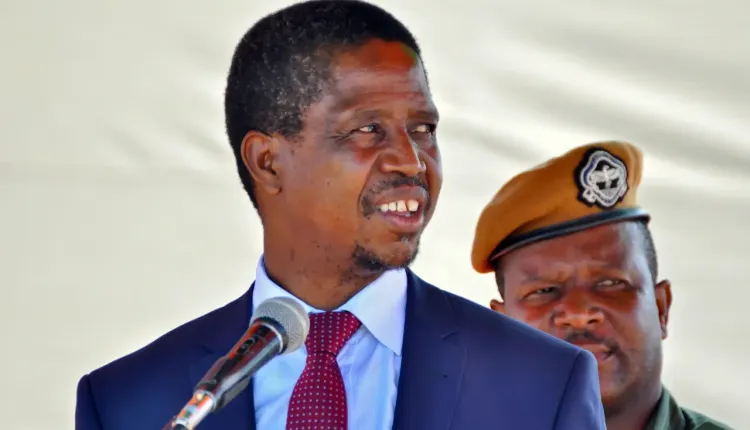
This paper examines the politicisation of the funeral and burial process of Zambia’s late former President, Dr Edgar Chagwa Lungu.
With the family’s refusal to permit President Hakainde Hichilema’s attendance at the funeral, and the unprecedented decision to bury Dr Lungu in South Africa—delayed further by a South African court injunction pending an August 2025 hearing—this development reflects a deepening of personal and political divisions within the Zambian state.
The paper explores the potential of this burial to transform into a symbol of resistance, examines whether grief is being appropriated by opposition forces, and assesses the long-term institutional and ethical risks to Zambia’s democratic norms.
Introduction
The passing of a head of state is typically a moment for national reflection, healing, and unity. In many African states, including Zambia, the death of a political leader holds symbolic power, capable of transcending party lines and temporarily neutralising political hostilities.
Yet, the death of former President Lungu has instead revealed the fault lines that continue to define Zambian politics.
At the centre of the controversy lies the family’s decision to bar President Hichilema from the funeral and to bury the deceased in South Africa—an act without precedent in Zambia’s post-independence history.
This decision has been further complicated by the intervention of the South African High Court, which has stayed the burial until a full hearing in August 2025.
What was expected to be a solemn national event has now become a transnational legal and political drama, fuelling speculation over motives, legitimacy, and the future of political reconciliation in Zambia.
A Burial Abroad: Grief or Defiance?
While the Lungu family insists that their decision is guided by personal and moral considerations—namely, that the deceased would not have wished for President Hichilema to preside over or attend his funeral—critics argue that this move is overtly political.
The refusal to accept a state-led burial, the selection of foreign soil, and the conditional promise of future repatriation only after Hichilema has vacated office, collectively point to a narrative steeped in political defiance.
This raises an urgent ethical question: can a family, in mourning, justifiably transform a national event into a platform of protest?
Or, conversely, is the family itself a conduit for opposition forces seeking to use death as a strategic tool to de-legitimise the sitting government?
Judicial Intervention and Transnational Reverberations
The South African judiciary’s decision to halt the burial pending a full hearing adds a new dimension to this saga. While the details of the case remain under legal confidentiality, its implications are broad.
The judiciary’s intervention not only suspends the family’s decision but also internationalises what ought to have been a domestic matter of national mourning and constitutional honour.
This raises uncomfortable questions about Zambia’s institutional capacity to mediate such crises and exposes the vulnerabilities of its transitional protocols regarding former heads of state.
The Risk of a Grave as a Political Shrine
Perhaps most consequentially, the decision to bury Dr Lungu outside Zambia carries symbolic and political dangers that may not yet be fully grasped.
There is a legitimate concern that Lungu’s grave, particularly if located in South Africa, could evolve into a shrine of resistance—a site of pilgrimage for opposition supporters and a potent emblem of what they perceive as injustice or martyrdom under Hichilema’s leadership.
In African political cultures, death often engenders compassion. The public, when confronted with the image of a dishonoured or marginalised former leader, can become susceptible to emotional narratives that romanticise the deceased while vilifying the living.
If managed poorly, this episode could allow the opposition to instrumentalise Lungu’s death in ways that amplify populist grievance, destabilise the political centre, and reframe national discourse around victimhood and exclusion.
In this context, the critical question becomes: Will the opposition succeed in manipulating national grief to mislead the Zambian people? Can they, through calculated symbolism and emotional appeals, obscure the democratic legitimacy of the sitting government?
The answer to these questions will shape the trajectory of Zambian politics for years to come.
Institutional Fragility and Normative Risks
Zambia’s constitutional tradition, while resilient, is still consolidating. The danger of politicising state funerals lies not only in the immediate polarisation it causes but also in the precedent it sets.
If funerals become battlegrounds for political retribution, and if the authority of the incumbent President can be publicly and ceremonially repudiated without consequence, then a key pillar of national cohesion begins to erode.
Moreover, it risks personalising the office of the presidency to the extent that state rituals are no longer regarded as expressions of the republic but as instruments of political favour or disfavour.
This undermines the capacity of the state to honour its past while governing in the present.
Conclusion
The delayed and contested burial of Dr Edgar Lungu is not simply a private family affair; it is a national moment charged with historical and political significance.
Whether the Lungu family is acting out of sincere grief or as a proxy for political resistance, the broader implications are clear: Zambian democracy must navigate this crisis carefully or risk normalising enmity beyond the grave.
President Hichilema must resist the urge to retaliate and instead demonstrate a higher moral authority by upholding respect for the dead, regardless of exclusion.
Conversely, the opposition must ask itself whether a strategy built on symbolic grievance truly serves the interests of the Zambian people—or merely exploits their compassion.
In an era where political messaging often outpaces institutional restraint, Zambia is faced with a profound choice: to rise above the politics of the grave, or to become haunted by them.
Dr Sibangilizwe Moyo writes on Church and Governance, politics, legal and social issues. He can be reached at [email protected]