



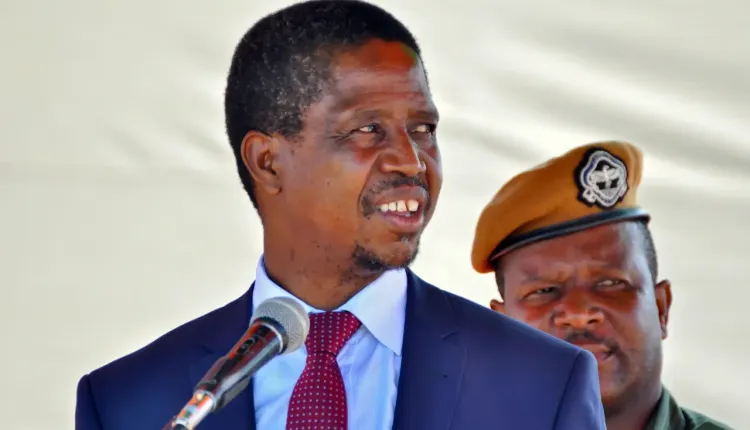
The death of a leader is never a private affair. When President Edgar Lungu passed away in Johannesburg on 5 June 2025, Zambia was thrust into a legal and moral drama that spilled across borders.
His widow and family sought a private interment in South Africa. The Zambian government demanded repatriation for a state funeral. The South African courts became the arena of contestation, and once again the perennial question arose: who owns the body?
The Corpse and the Law: Property or Sacred Trust?
It is a settled principle in common law jurisdictions that there is no property in a corpse. The old English authority Williams v. Williams (1882) 20 Ch D 659 (CA) remains foundational: the wishes of the deceased are not binding because a body cannot be treated as property in succession.¹
South African jurisprudence has taken the same line. In Mahala v Nkombombini 2006 (5) SA 524 (E), the Eastern Cape High Court affirmed that burial rights are not proprietary but relational.²
Likewise, in S v Williams 2010 (2) SACR 104 (WCC), the court reiterated that no person “owns” a body, but certain relatives have authority to determine burial.³
Courts usually apply a presumptive hierarchy: spouse, then children, then parents. In Spies v Smith 2007 (5) SA 485 (C), the widow’s right to bury her husband prevailed.⁴
In Ngubane v South African Police Service 2014 (5) SA 530 (KZP), however, the court emphasised that fairness and dignity may justify departures from strict hierarchy.⁵
The Lungu Case in South Africa
In June 2025, Lungu’s family attempted to bury him privately in Johannesburg. On 25 June, the Pretoria High Court interdicted that burial at the request of the Zambian government.
On 8 August, a full bench ordered his repatriation for a state funeral. The widow appealed, and judgment remains reserved.⁶
Here, the principle of lex loci (the law of the place where the body lies) applied. South African courts had jurisdiction to issue interim orders, but in exercising that jurisdiction, they gave weight to Zambia’s compelling public interest in honouring a former head of state.
Zambia’s Law and Practice on Presidential Burials
Once a body is repatriated, Zambian law governs. There is no statute compelling burial of former presidents at Embassy Park, but since President Levy Mwanawasa’s death in 2008, it has become a constitutional convention.
In Kaunda v Attorney General (2021/HP/027, Lusaka High Court), Zambia’s founding president’s burial was challenged by family.
The court held that the government’s decision to accord a state funeral was lawful and reasonable under administrative law.⁷ This established that presidential funerals are public functions, not merely family ceremonies.
The Clash of Interests: Family vs. State
Thus the collision: the widow’s presumptive burial rights against the state’s sovereignty and public interest. In Mahala, the court held that a deceased’s stated wishes could be overridden by fairness.²
The Pretoria High Court applied similar reasoning in the Lungu matter, prioritising Zambia’s public interest.
The deeper truth is that burial disputes involving leaders are not merely legal contests. They are struggles over memory, legitimacy, and national story.
Comparative African Perspectives
Zambia is not alone. Across Africa, the graves of leaders have been battlegrounds of politics:
Zimbabwe (Robert Mugabe, 2019): His family resisted burial at Heroes Acre, leading to weeks of delay before his interment at Kutama village.⁸
Kenya (Jomo Kenyatta, 1978): The state swiftly assumed control, choreographing a national burial that left little room for family contestation.⁹
Malawi (Hastings Banda, 1997): Burial was delayed by disputes over site; he was eventually interred in Kasungu, reflecting unresolved divisions.¹⁰
South Africa (Mandela family dispute, 2013): The Eastern Cape High Court had to order the reburial of Mandela’s children after a family feud over burial sites, underscoring the judiciary’s role in burial disputes.¹¹
These examples demonstrate a recurring pattern: when private kinship collides with public legacy, courts are called in, but resolution requires more than law.
The Church and Ethical Imperatives
Theologically, the body is sacred not because it is property but because it bears the image of God. To quarrel over burial desecrates that dignity.
The church must remind states that families are not mere spectators, and remind families that nations cannot be absent from the graves of their leaders. Ethical guardrails are needed:
- Dignity – swift, respectful resolution.
- Subsidiarity – hear family voices first.
- Transparency – publish the legal basis for state funerals.
- Comity – respect between states without trampling family dignity.
- Healing – graves should reconcile, not divide.
- Practical Proposals
Families: record burial wishes and designate custodians.
States: codify state-funeral law, specifying eligibility, sites, and family rights.
Courts: issue interim orders that preserve dignity and foster negotiation.
Conclusion
The Lungu dispute forces us to ask not only who owns the body but who owns the story. Across Africa — from Zimbabwe to Kenya, Malawi to South Africa — burial sites of leaders have become stages for unresolved politics.
Law tells us that a body is not property. The church tells us that it is sacred. The state claims a public duty; the widow claims private grief. Only wisdom, humility, and compassion can reconcile these claims.
The grave must not be a battlefield. It must be a threshold of memory, where the story of a people is written in dignity rather than division.
Notes & References
- Williams v Williams (1882) 20 Ch D 659 (CA).
Mahala v Nkombombini 2006 (5) SA 524 (E).
S v Williams 2010 (2) SACR 104 (WCC).
Spies v Smith 2007 (5) SA 485 (C).
Ngubane v South African Police Service 2014 (5) SA 530 (KZP).
Pretoria High Court, Order of 25 June 2025 (interdict) and Full Bench Judgment, 8 August 2025 (repatriation order) [Appeal pending, judgment reserved as of Sept 2025].
Kaunda v Attorney General (2021/HP/027, Lusaka High Court).
“Mugabe buried in Kutama,” BBC News, 28
Dr Sibangilizwe Moyo writes on Church & Governance, politics, legal and social issues. He can be reached at [email protected]